
Kanazawa is one of Japan’s most underrated gems, a city where samurai streets, geisha teahouses, and stunning gardens all blend into one. If you’re wondering what to see and do in Kanazawa, this guide takes you through the top 10 attractions and activities—from seasonal cherry blossoms to hidden local experiences. Whether you’re visiting in spring or planning a short stop on the Hokuriku Shinkansen route, Kanazawa will surprise you with history, culture, and charm at every turn.
🌸 Kenroku-en Garden – One of Japan’s Three Great Gardens
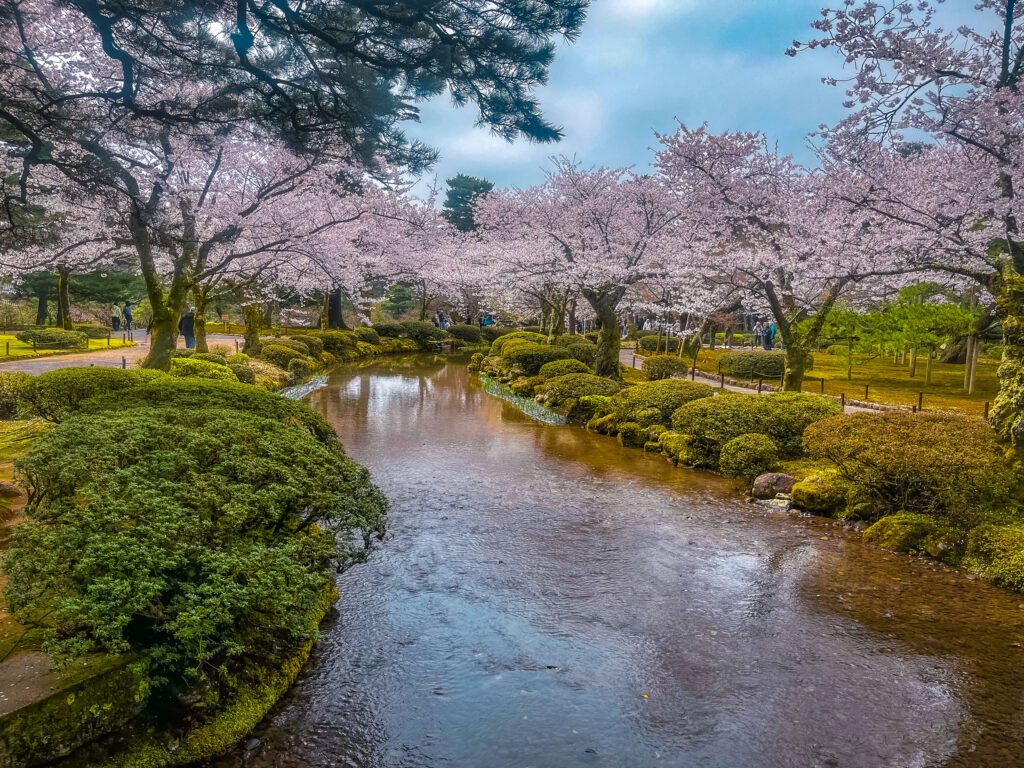
Kenroku-en Garden is one of Japan’s “Three Great Gardens” and Kanazawa’s top attraction. We rate it as one of the best cherry blossom spots in the country—stunning photos without the Kyoto-style crowds.
Two areas stand out: the Hanami-Bashi Bridge, perfect for sakura views, and the Hisago-ike Pond with its small bridge and Kaiseki Pagoda. Both are unforgettable places to sit, take photos, and enjoy the calm of the garden.
💡 Tip: Visit early morning or late afternoon for fewer crowds. During sakura season, the garden also opens at night for free—an absolute must if you’re there in spring
🏮 Kanazawa Chaya Districts – Step Back to the Edo Period
The Kanazawa Chaya Districts are some of the city’s most atmospheric areas, where traditional tea houses (chaya) line cobbled streets. These districts date back to the Edo period, when geisha (known locally as geiko) entertained wealthy guests with dance, song, and shamisen music. Today, you can wander the same streets, peek into old tea houses, and enjoy a mix of history, culture, and modern cafes.
Kanazawa has three main chaya districts:
- Higashi Chaya – the most famous and busiest, full of shops and historical tea houses.
- Nishi Chayagai – smaller but quieter, with preserved streets.
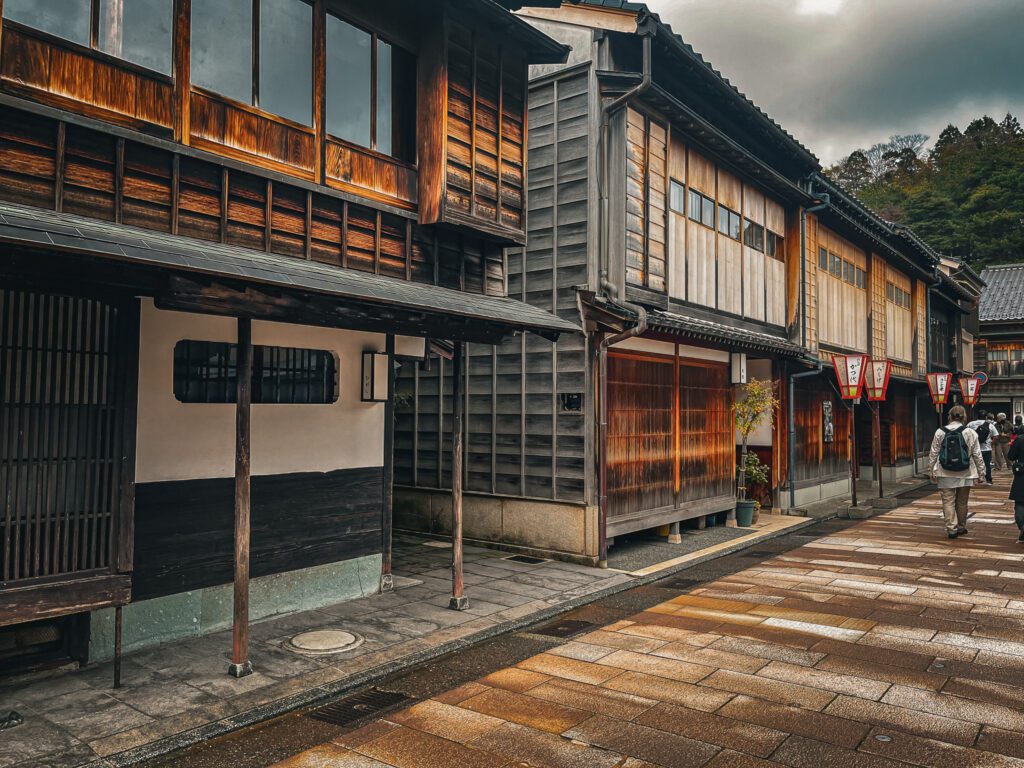
- Kazuemachi – less crowded and our personal favorite, just across the river from Higashi, offering beautiful views of its wooden townhouses lit up at dusk.
🌸 Higashi Chaya – The Most Popular District
Higashi Chaya is the largest and liveliest of the districts. It can get crowded, but it’s also where you’ll find the best mix of history and experiences.
Things to do in Higashi Chaya:
- Shima Tea House: Preserved just as it was in the Edo period—step inside to imagine how guests were once entertained.
- Kaikaro Teahouse & Café: The largest chaya in Kanazawa, with over 200 years of history and beautifully preserved architecture.
- Kyukeikan Rest House: A late Edo-period townhouse showcasing feudal architecture.
- Gold Leaf Shops & Experiences:
- HAKUZA: Famous for its edible gold leaf, including Kanazawa takoyaki topped with an entire sheet of gold. Don’t miss the lively atmosphere and unique souvenirs. Official site →
- Sakuda Gold Leaf Shop: Offers hands-on experiences where you can try applying gold leaf. Official site →
- Kanazawa Gold Leaf Company: Another option for workshops and gold leaf products. Official site →
- Try a Gold Leaf Ice Cream: A quirky Kanazawa speciality, sold at a few shops in the district.
🌙 Kazuemachi Chaya – A Peaceful Escape
Just across the river from Higashi, Kazuemachi Chaya is much quieter, with fewer tourists. Traditional wooden houses line narrow alleys, and from across the river you’ll get some of the best views of the district. We loved wandering here at sunset—it felt like stepping back in time without the crowds.
🍵 Nishi Chayagai – Small but Atmospheric
The smallest of the three, Nishi Chayagai is worth a short detour if you want to see more chaya architecture without the bustle. A few tea houses and shops remain open, but it’s mainly about soaking in the preserved streetscape.
💡 Travel Tip
Visit Higashi Chaya early in the morning to enjoy the streets before they get busy. Then, wander across to Kazuemachi in the late afternoon or evening for a quieter, more atmospheric experience.
🥷 Kanazawa Ninja Temple (Myouryuji) – The Illusion of a Two-Storey Temple
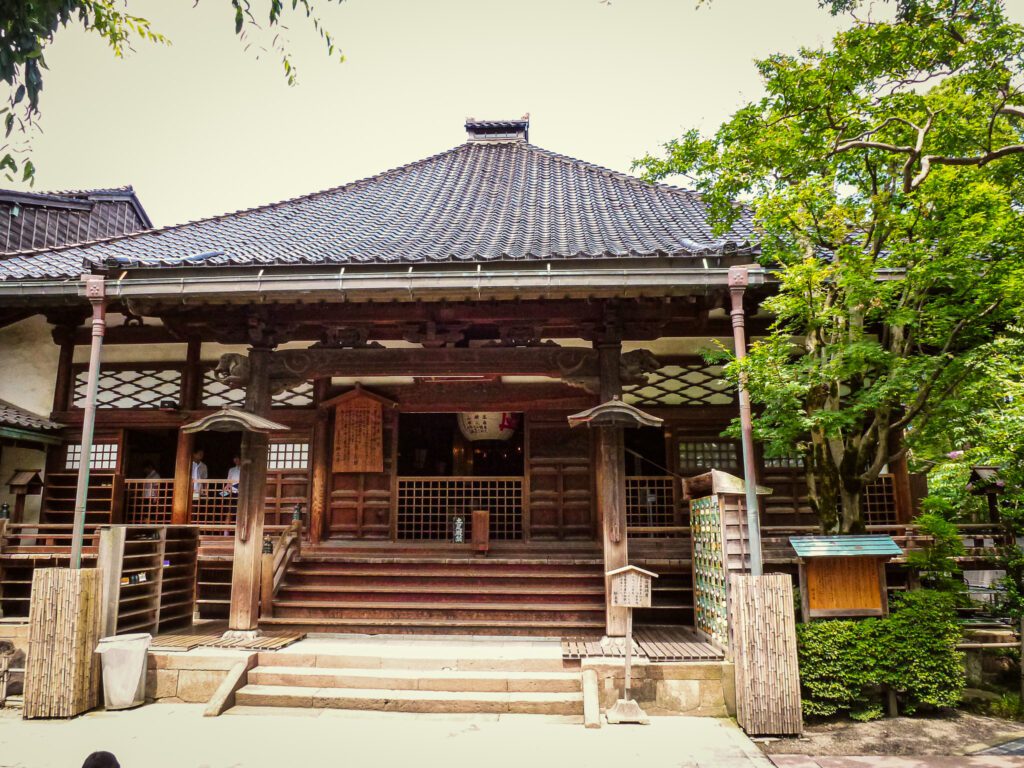
Hidden in the quiet Teramachi district, Myouryuji Temple—better known as the Kanazawa Ninja Temple—is one of the city’s most intriguing attractions. Founded in 1643, it belongs to the Nichiren sect of Buddhism. The statue of Nichiren Shonin was placed in the temple, and has been believed to be highly responsive to prayers. You’ll not only be visitng a Buddist Temple but you’ll also step into a place built for strategy, secrecy, and survival.
🏯 The Temple That Outsmarted the Shoguns
During the Edo period, Japan’s ruling shoguns forbade regional lords from constructing more than three-storey buildings. Myouryuji was cleverly designed to circumvent these restrictions. From the outside, it looks like a modest two-storey temple—but inside, it hides a four-storey structure with seven internal layers, 23 rooms, and 29 staircases.
The temple building features include hidden floors, trap doors, and escape routes to protect against intruders and spies. It wasn’t actually used by ninjas, but its ingenious design earned it the nickname “Ninja-dera” (Ninja Temple).
🌀 Secrets, Traps, and Hidden Tricks
As you move through the temple’s maze-like corridors, you’ll discover:
- Hidden staircases and trap doors leading to concealed chambers.
- A sliding door with a removable floorboard, opening into a secret room.
- A watchtower lookout that once sent light signals to Kanazawa Castle.
- The eerie “light stairs”—where guards below could detect enemies by their shadows and spear their feet through the steps.
- A well is rumoured to connect to an underground escape tunnel leading toward Kanazawa Castle.
Every detail was designed to confuse intruders and protect the Maeda clan.
🗝️ Visiting Information
- Advance Booking Required: You must call ahead to reserve a tour slot. We asked our hotel receptionist to call on our behalf—definitely the easiest way to book.
- Language Note: As of 2025, only Japanese-speaking guides were available, but they hand out English printouts explaining each room.
- Tour Duration: About 40 minutes (guided only).
- Best for: History lovers and architecture fans. If you only have one day in Kanazawa, you can skip it—but if you have 2–3 days, it’s absolutely worth the visit.
👉 Insider Note:
The Kanazawa Ninja Temple is about a 15-minute bus ride from Kanazawa Station, in the Teramachi Temple District, which itself is a peaceful area to explore with several other temples nearby.
🏯 Kanazawa Castle Park – A Walk Through History and Blossoms
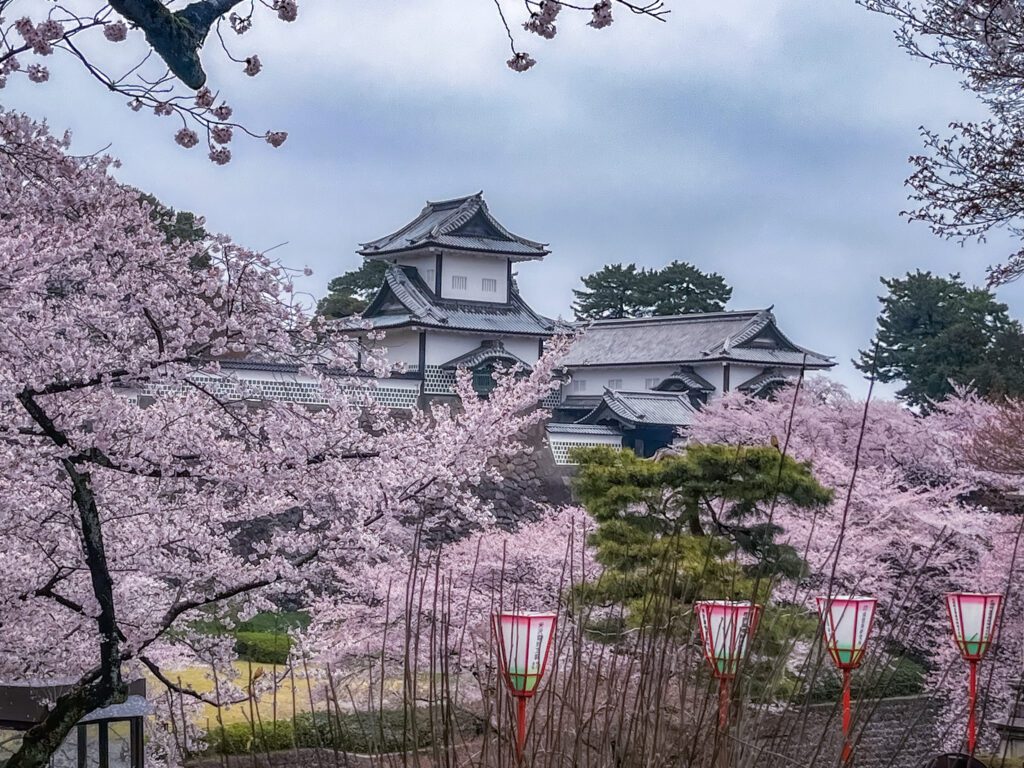
Kanazawa Castle Park is one of the city’s highlights, combining history, wide green spaces, and seasonal beauty. If you’re wondering, can you enter Kanazawa Castle?—yes, you can walk freely through the grounds and enjoy the reconstructed castle buildings. The park is especially magical in spring during cherry blossom season.
🌸 The Best Entrance & First Impressions
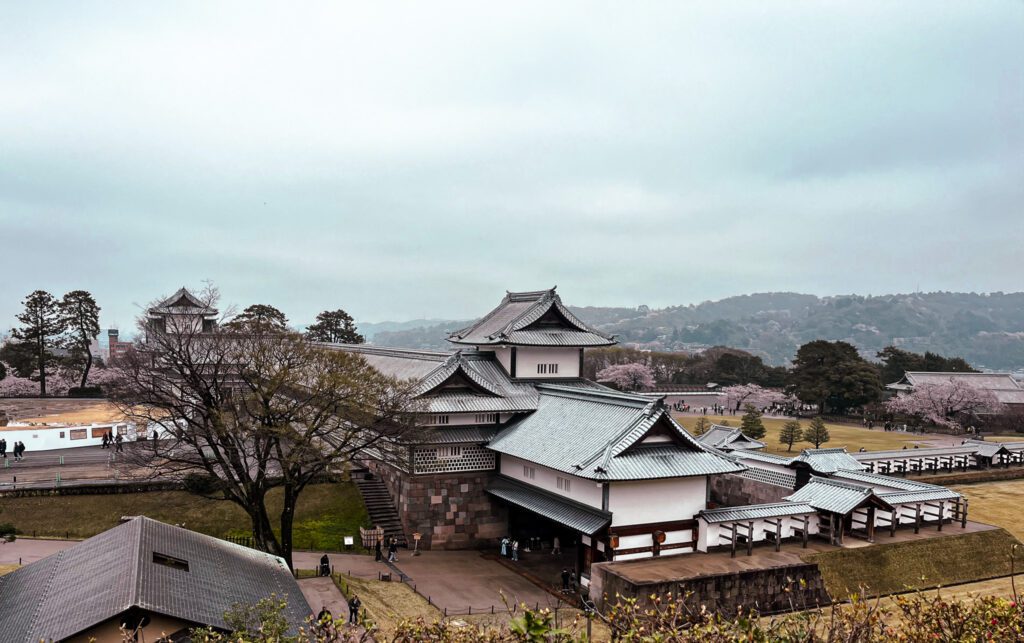
Enter through the Ishikawa-mon Gate, one of the few original parts of Kanazawa Castle still standing. In cherry blossom season, the walk across Ishikawabashi Bridge feels like stepping into a painting, with pink blooms surrounding the castle. This was one of our favourite memories of Kanazawa—watching locals and travellers stop to take in the view before wandering further inside.
📜 A Glimpse of History
Kanazawa Castle was built in the late 1500s as the seat of the powerful Maeda clan, who ruled the Kaga Domain for over 300 years. Much of the original castle was destroyed by fires, but careful reconstructions give visitors a sense of its former scale and importance.
Key highlights inside the park include:
- Hishi Yagura (Watchtower): A massive defensive tower with an unusual diamond-shaped layout.
- Gojikken Nagaya (Storehouse): A long warehouse once used to store weapons and supplies, now rebuilt to show traditional carpentry.
- Hashizume-mon Tsuzuki Yagura: Another restored watchtower and gate, giving insight into how the castle was defended.
These reconstructions were built using traditional techniques, making them as close as possible to the original Edo-period structures.
🌿 Gyokusenin Maru Garden
Within the castle grounds lies the beautifully restored Gyokusenin Maru Garden, originally created in the Edo period. With ponds, stepping stones, and seasonal flowers, it’s a serene contrast to the vast castle walls. It’s especially lovely in spring and autumn, when the colors reflect in the water.
🍵 Gyokusen-an Tea House
Overlooking the garden, the Gyokusen-an Tea House offers one of Kanazawa’s most peaceful experiences. Sit by the window with a bowl of frothy matcha and a traditional sweet, and watch the garden scenery change with the seasons. It’s a quiet, reflective break from sightseeing—perfect if you’re travelling as a couple or solo.
🕰 Opening Hours
At the time of our visit, Kanazawa Castle Park opening hours were:
- March – October 15th: 7:00 AM – 6:00 PM
- October 16th – February: 8:00 AM – 5:00 PM
Arrive early to avoid crowds, especially in spring and autumn.
📖 Visitor Info & Guided Tours
Just after the Ishikawa-mon entrance, look to your right for the Visitor Office. Here, you can pick up a short printed guide (available in English) and check for the free guided walking tours, which usually run every hour. These tours are a great way to learn the castle’s history and spot details you might miss on your own.
🗡️ Kanazawa Samurai District & Nomura Samurai House
Walking through the Kanazawa Samurai District, known locally as Nagamachi, feels like slipping quietly into the Edo period. The narrow lanes are lined with ochre clay walls, trickling water channels, and wooden gates that once guarded samurai homes.
🏯 Exploring the Samurai Streets
We loved exploring this area on foot — every corner offered a glimpse of another time. The cobbled paths curve gently between earthen walls, some topped with moss and tile. Small canals run beside them, carrying water that once flowed into samurai gardens. Early morning is the best time to visit; the streets are almost silent except for the soft rustle of bamboo and distant temple bells.
It’s not a big district, so you can take your time. We strolled slowly, stopping to peek through gates and admire the subtle beauty of the architecture — simple, strong, and balanced.
🏡 The Nomura-ke Samurai House – A Window into the Past
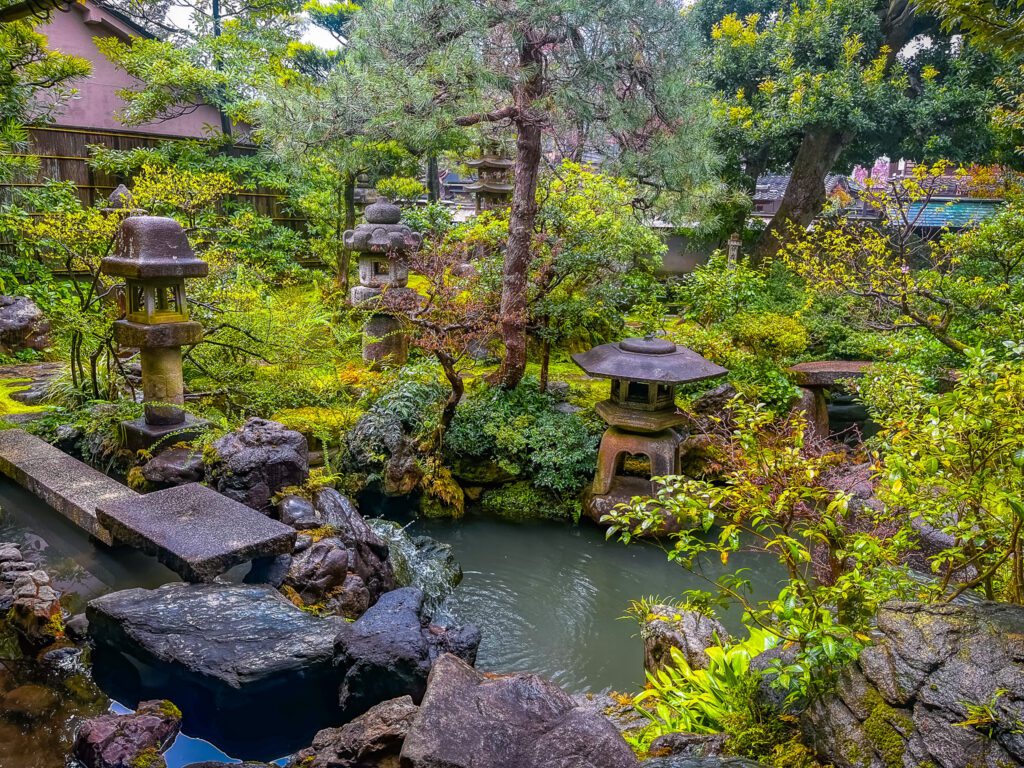
The highlight of our walk was the Nomura-ke Samurai House, the restored residence of the Nomura family who once served the Maeda lords. From the outside, it looks modest, but step inside and you’re instantly surrounded by history. The rooms are connected by narrow wooden corridors, and sunlight filters softly through the paper screens. Each room displays artifacts — samurai armor, swords, calligraphy scrolls — that tell stories of honor and refinement.
The real magic, though, lies in the garden. It’s a miniature masterpiece — a small waterfall trickling into a pond crossed by a stone bridge, with koi gliding under maple leaves. Several stone lanterns add quiet symmetry. We sat for a few minutes on the edge of the veranda, watching the ripples in the water, and it felt like time had stopped.
Upstairs, a small tea room overlooks the garden. It’s one of the most peaceful spots in Kanazawa. Sitting there with matcha and a view of the pond below was a moment we won’t forget.
🌿 Tips for Visiting the Samurai District
- When to go: Visit early in the morning or late afternoon to enjoy the quiet atmosphere and soft light.
- Time needed: Around 45–60 minutes for the house, plus another half hour to wander the surrounding streets.
- Admission: Approximately ¥550 for adults. Open 8:30 AM – 5:30 PM (shorter hours in winter).
- Combine with: Kanazawa Castle Park and Oyama Shrine — both within easy walking distance.
- Local tip: Even if you skip going inside the house, don’t miss walking the nearby alleys; they’re among the most atmospheric in Kanazawa.
🎎 Kanazawa Geisha (Geiko) Experience
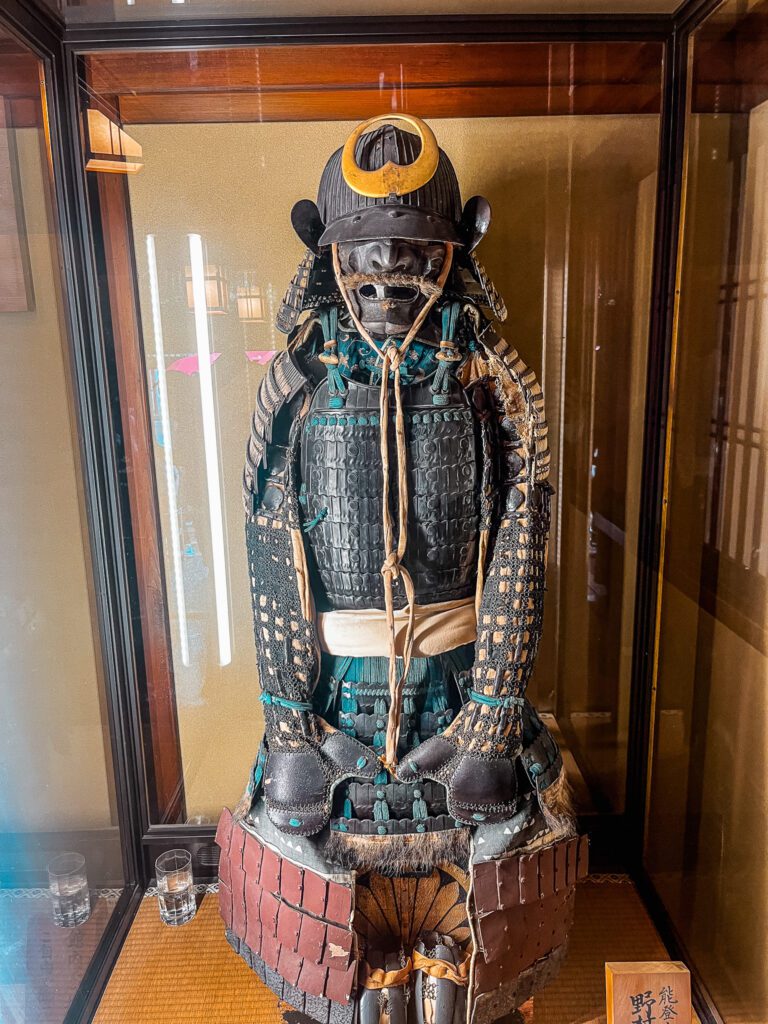
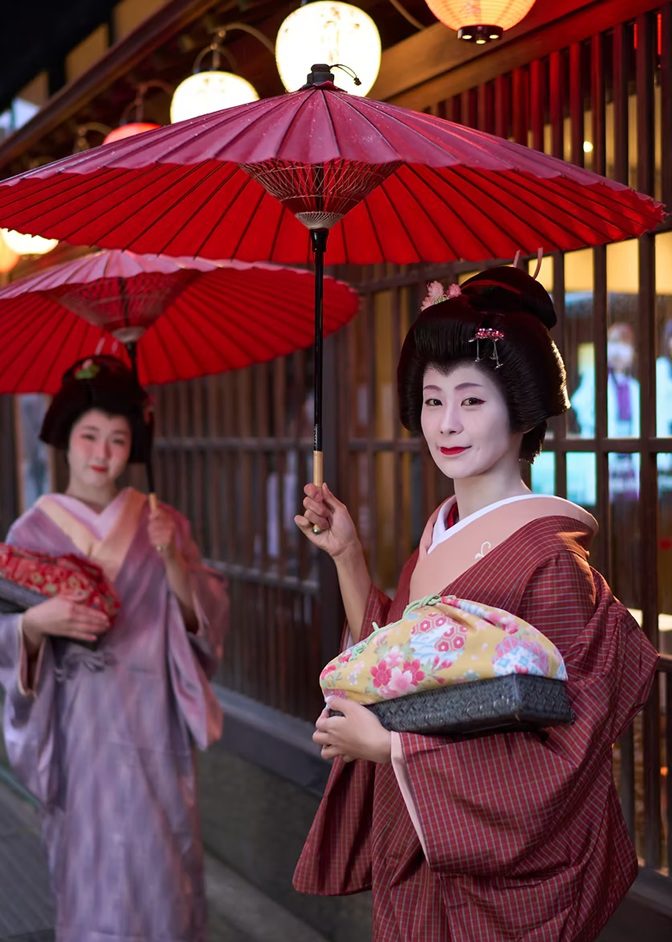
In Kanazawa, tradition still walks softly through the narrow streets of the Chaya districts, where the sound of shamisen strings floats out from behind wooden lattice doors. Here, you can still meet and watch real Geisha — or “Geiko,” as they’re called in Kanazawa — performing songs, dances, and conversation just as they have for centuries.
The best places to experience them are the Higashi Chaya and Kazuemachi Chaya districts, both beautifully preserved, with teahouses dating back to the Edo period.
🌸 Kaikaro Teahouse – Geisha Evening Experience
Kaikaro Teahouse is more than 200 years old, has been officially designated as a historic building by the city. Stepping through its sliding doors feels like stepping into a living museum — glowing lanterns, polished wood, and soft koto music set the tone.
The Geisha Experience at Kaikaro includes a warm, bilingual introduction by the landlady, famously known as “Lady Baba.” Her storytelling — delivered in clear, witty English — helps you understand the traditions, etiquette, and artistry of the geiko world.
You can choose from several packages:
- Standard performance + building tour
- Performance + tea ceremony experience
- Performance + private dinner with Geiko
Each performance blends elegance and charm: graceful dance, shamisen melodies, and conversation that makes you feel like an honoured guest.
Booking: Tickets and details are available at geisha-evenings.jp. It’s best to book early, as seats are limited and performances are seasonal.
🏮 Kanazawa Asanogawa Enyukai Hall – Meet the Geiko
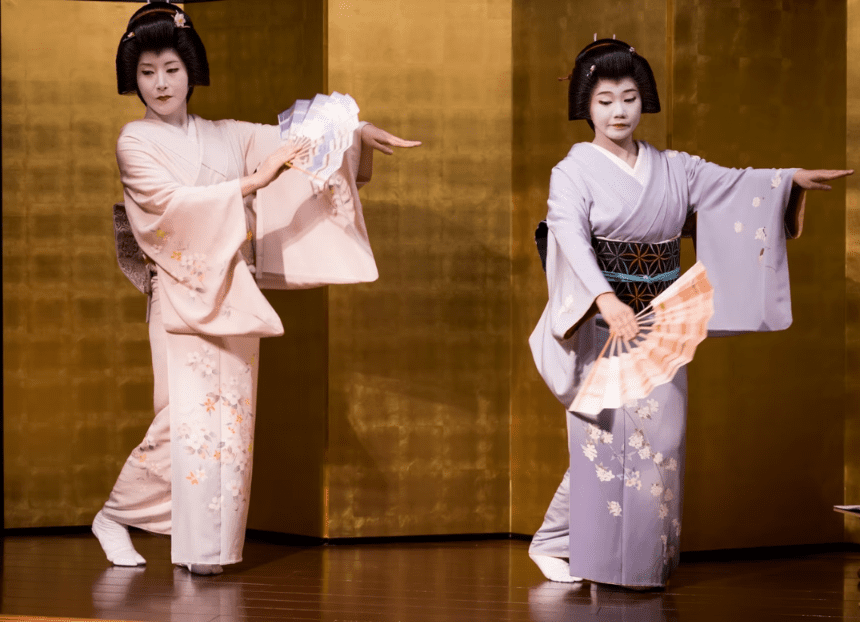
Another unforgettable way to experience Kanazawa’s geisha culture is the “Meet the Geiko” event at the Asanogawa Enyukai Hall. This is a slightly more interactive evening, where two Geiko perform — one jikata, who plays and sings with the shamisen, and one tachikata, who performs traditional dance.
After the performance, guests are invited to play traditional ozashiki party games with the Geiko and chat freely with them. It’s a rare opportunity to ask questions about their daily life, training, and the meaning behind their art — something you rarely get to do in Kyoto.
You can book directly via kanazawa-asanogawaenyukai.biz. The atmosphere is relaxed yet respectful, making it a perfect introduction to authentic geisha culture for first-time visitors.
💡 Tips for Enjoying Your Geisha Experience
- Book ahead: Both venues are small and often sell out, especially during spring and autumn.
- Dress smartly: Casual clothes are fine, but avoid loud or revealing outfits — think respectful and simple.
- Photography: Always ask first. At Kaikaro, photography is usually permitted after the performance.
- Language: Lady Baba’s English presentation makes Kaikaro the most foreigner-friendly choice.
- Time needed: About 90 minutes for the full experience.
✨ Kanazawa Gold Leaf Experience & Shop
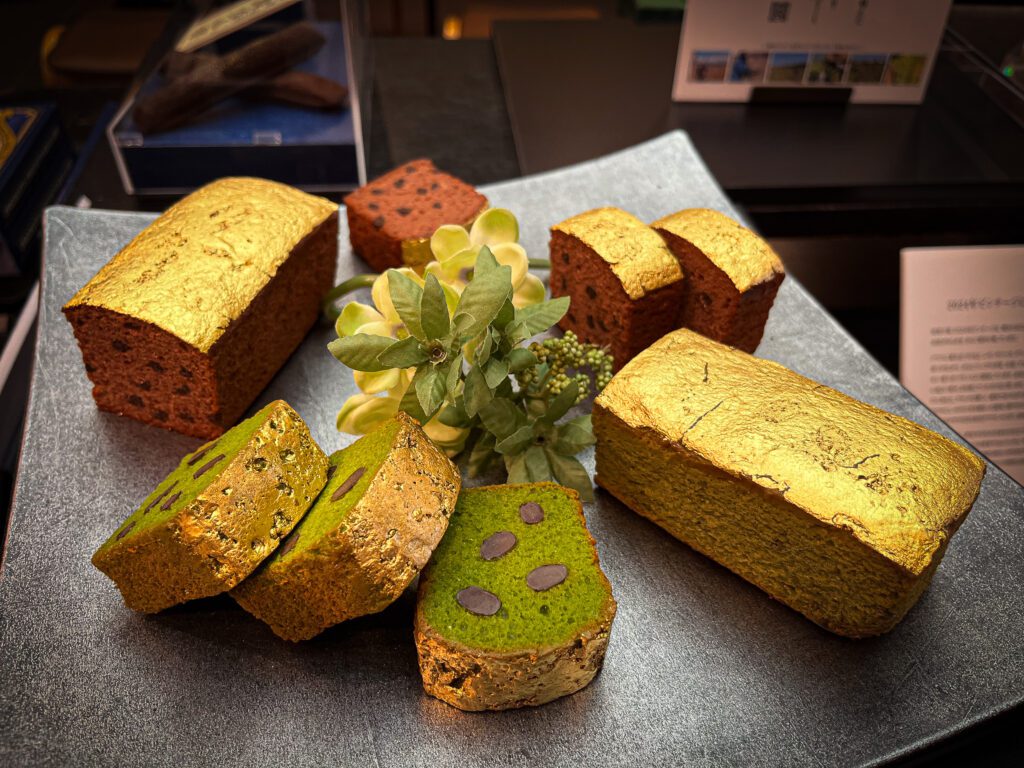
When you think of Kanazawa’s craftsmanship, one thing shines brighter than anything else — gold leaf. The city has perfected the art of gold leaf production for over 400 years, and today it still produces nearly 100% of Japan’s gold leaf.
Each leaf is unbelievably delicate — only 0.0001 mm thin, lighter than a soap bubble. You can’t even feel it resting in your palm. Because it’s so fine, Kanazawa’s gold leaf can be applied to wood, ceramics, paper, lacquerware, leather, and even food. In 2020, this time-honoured process was recognised by UNESCO as an Intangible Cultural Heritage, cementing Kanazawa’s reputation as Japan’s “Golden City.”
🏆 Why Kanazawa Is Famous for Gold Leaf
Kanazawa’s connection to gold dates back to the Edo period, when the Maeda clan encouraged artisans to develop refined crafts that would rival Kyoto. The region’s clean water and humidity made it perfect for the fragile process of stretching gold into ultra-thin sheets.
Here’s what makes Kanazawa’s gold leaf so special:
- 400 years of craftsmanship: A legacy that began in the 17th century and continues through family-run workshops.
- Exceptional purity: The gold is hammered to 0.0001 mm — thinner than human hair or even a soap bubble.
- Versatility: Used in temples, crafts, and even culinary art (you’ll find gold leaf on coffee, sake, and ice cream).
- Famous legacy: The same gold leaf made here adorns Kyoto’s Kinkaku-ji (Golden Pavilion).
- UNESCO recognition (2020): Honouring the artisans who preserved this delicate, hand-crafted tradition.
🎨 Our Gold Leaf Workshop at HAKUZA
To truly understand this heritage, we joined a Kanazawa gold leaf experience at HAKUZA Main Store at 1 Chrome 30-4 Moriyama , Kanazawa. We booked the Standard Plan a day earlier when we came across thier smaller shop in Higashi Chaya District.
The process takes 45 mins to about an hour and is suitable for all ages. It’s one of those hands-on experiences that combines learning, laughter, and craftsmanship — and you take home your golden masterpiece at the end.
🏯 The Golden Tea Room – Kanazawa’s Hidden Treasure
Inside HAKUZA Main Store, you’ll find something extraordinary — the Golden Tea Room, finished with more than 40,000 sheets of Kanazawa gold leaf.
This dazzling space is modern replica of the legendary tea room of warlord Toyotomi Hideyoshi, once used to impress visiting dignitaries with its golden glow.
It’s free to visit, and even if you don’t join a workshop, the Golden Tea Room alone makes HAKUZA worth stopping for.

🛍️ Shopping & Souvenirs
After the workshop, we explored HAKUZA’s boutique filled with elegant gold-leaf goods — lacquerware, cosmetics, accessories, and edible gold products. We couldn’t resist buying a gold-leaf sprinkler to dust desserts back home.
And of course, we tried the gold-leaf soft serve ice cream, one of Kanazawa’s most iconic treats. It’s shiny, photogenic, and surprisingly tasty!
If you have time, visit Gold Leaf Sakuda, another long-established shop offering friendly workshops and intricate gold-leaf souvenirs. Both HAKUZA and Sakuda are perfect for a family outing — creative, cultural, and memorable.

💡 Practical Tips
- Workshop Duration: About 45–60 minutes
- Price Range: Standard Plan costs about ¥5,000 per person
- Best For: Families, couples, or anyone who loves creative experiences
- Booking: Walk-in or reserve in advance (recommended during weekends or spring season)
- Nearby: Don’t miss the Yasue Gold Leaf Museum, where you can learn about tools, techniques, and the evolution of this golden art.
🎖 Why This Experience Stood Out for Us
As a family activity, the gold leaf workshop surprised us. At the end of the workshop, they laminated the gold leafs that we created for us to carry home as souvenirs.
🍣 Omicho Market – Kanazawa’s Culinary Heart
Right in the heart of Kanazawa lies Omi-cho Market, the city’s largest fresh-food hub since the Edo period. Walking into the covered alleys of the market feels like stepping into a living tradition of taste, sight and sound. Whether you’re planning to eat or simply explore, it’s a must-stop.

🕘 Why Visit & What to Expect
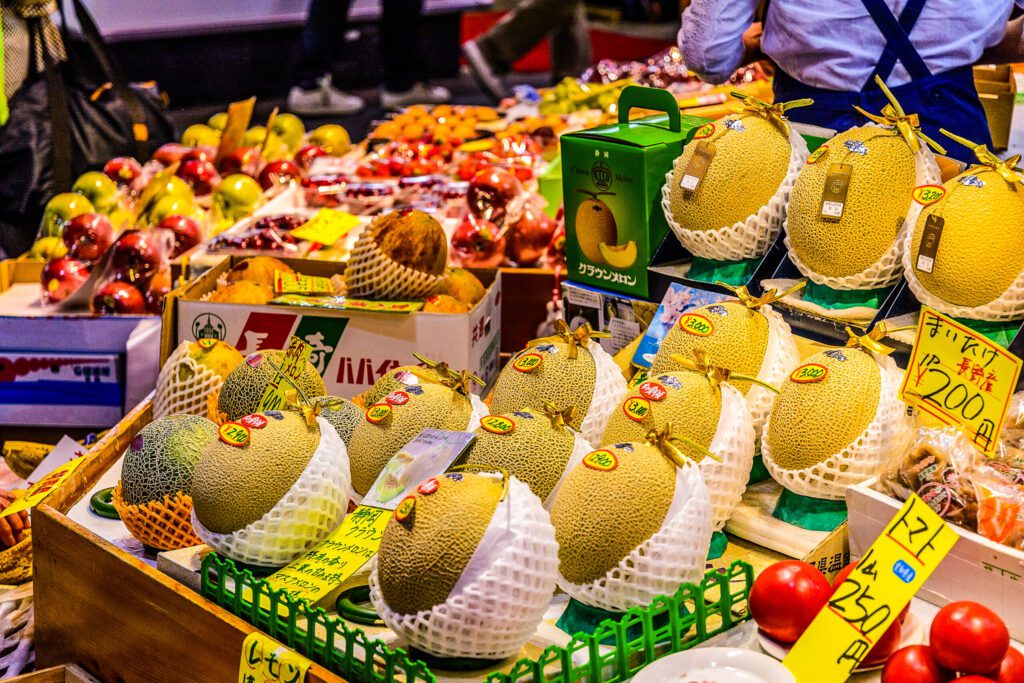
The market has been operating since the 17th century and today hosts well over 170 stalls and restaurants. You’ll see row upon row of fishmongers offering glistening sea urchin, snow crab, giant scallops and yellowtail from the Sea of Japan. You’ll also find fruit and vegetable stalls, dried goods, and eateries serving up local specialties like a towering kaisendon (seafood rice-bowl).
Even if you’re not hungry, wandering the market is worth it. Just be mindful that photography isn’t always permitted everywhere—many stall owners ask you to ask for permission. We experienced this ourselves and found the vendors mostly friendly when invited.
🥢 Food Highlights & Local Tips
- Best time to go: Morning or around lunch. Many shops begin winding down after about 3 PM, and by late afternoon only a few eateries remain open.
- Seasonal must-tries: In November and December you’ll find crab, yellowtail and shrimps in peak form—locals and tourists frequenting the market together.
- Recommended eats:
- A fresh kaisendon, stacked with local seafood and served atop warm rice.
- Grilled shellfish or oysters from a street-side counter. One reviewer raved: “The grilled oysters … enormous, meaty and delicious.”
- Try the gold-leaf soft-serve ice-cream (yes, gold leaf used as a topping!) for a fun treat.
🚶 Our Experience & Walkable Location
We found Omi-cho Market very convenient—just about a 10–15 minute walk from Kanazawa Station, so it works well as a first stop in the morning. We arrived just after opening, wandered through the aisles, paused at a fish stall for a sample, then sat down at a small counter for kaisendon while watching vendors in action. The atmosphere had an authentic local energy—not overly crowded like some markets in bigger cities, yet vibrant.
🎯 Smart Tips for Your Visit
- Visit early morning to catch the best selections and calmer aisles.
- Check the market’s opening hours: Officially 9:00 AM to ~17:30 PM, though many food stalls close earlier.
- On camera? Ask the vendor before taking a photo of their stall or products. We found that respect went a long way.
- If you go on a November/December visit, look out for the seasonal seafood (crab, yellowtail). It’s a special time in the market.
- Bring a little cash for small stalls and quick eats.
- Allocate at least 1 to 2 hours if you plan to browse and munch something good.
💭 Final Impression
Omi-cho Market felt like the beating foodie heart of Kanazawa. The sharp scent of sea, the shine on fresh sashimi, the friendly banter of stall-holders—it all combined into one of our most memorable mornings in the city. Even if you only walk through, stop for a snack and absorb the scene—you’ll bring home more than just food, you’ll take home atmosphere.
21st Century Museum of Contemporary Art, Kanazawa
Innovation Meets Space: Modern Art in the Heart of Kanazawa
The 21st Century Museum of Contemporary Art in Kanazawa opened in 2004 right in the city centre—just minutes from Kenroku‑en Garden—and quickly became one of Japan’s standout architecture museums. Designed by the architectural firm SANAA, its circular glass-walled structure invites curiosity and feels more like a public plaza than a traditional museum.
Why It’s Worth Visiting
- The architecture itself is an experience: no dominant front entrance, a transparent perimeter, and five entry points that blur the distinction between museum and city.
- Among its most iconic installations is Swimming Pool by Leandro Erlich — a deceptively shallow pool where visitors appear suspended under water.
- The museum is very accessible for families and casual visitors: many reviews say it’s “calm and inspiring” and lauded for its creative gift shop and comfortable layout.
🎟️ Practical Tips for Your Visit
- Some areas are free to enter, but to view current exhibitions (and to access the Swimming Pool installation) you’ll need a ticket—available online via the museum’s official site.
- Reservation needed: For the Swimming Pool you must reserve a time slot in advance—especially during busy periods.
- Recommended visit time: 1 to 1.5 hours. Good for a midday stop between castle/garden visits.
✅ Our Take
If you’re looking to blend traditional Kanazawa with modern flair, this museum delivers. The moment you step inside, the open plan and surprising installations make you feel you’ve entered a space where anything is possible.
The highlight? Stepping beneath the illusion of the Swimming Pool and reevaluating what “art” can really feel like.

Kanazawa Station, Tsuzumi‑mon Gate & Fountain Clock
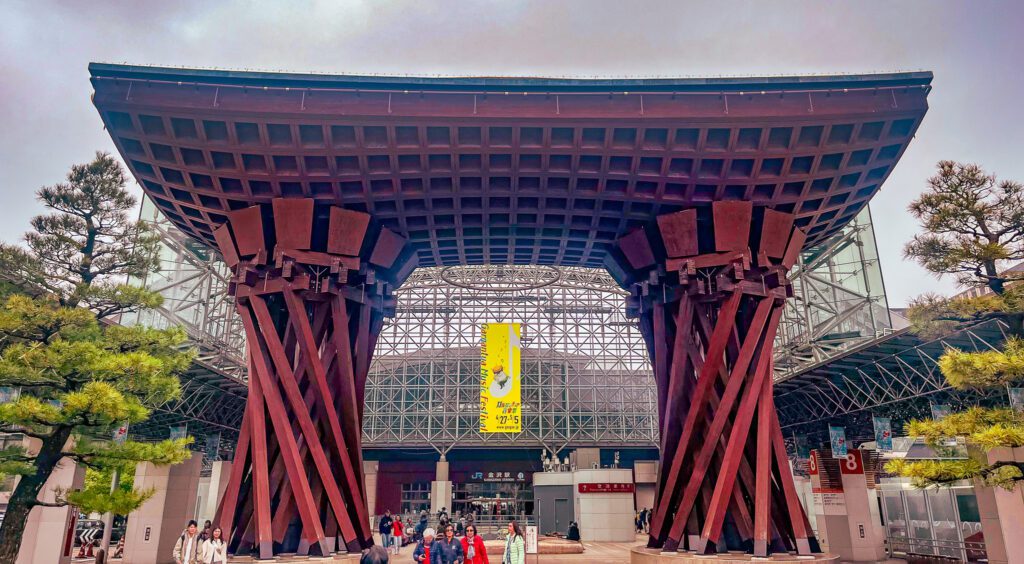
Stepping out of the train at Kanazawa Station, you’re immediately greeted by the Tsuzumi-mon Gate. This modern entrance isn’t just a portal—it’s a welcome statement of Kanazawa’s blend of tradition and innovation. Right next to it, the Fountain Clock adds a playful, watery twist to the arrival square. The Fountain Clock sits in the East Plaza of the station and delights visitors every hour with water jets and time display—a fun extra for anyone arriving or departing.
🧭 Visit Tips & Details
- Location & access: The station is central and walkable from many hotels in Kanazawa.
- Best time for photos: Daytime gives good clarity; evening offers the illuminated Gate which many say is more spectacular.
- Short visit? Even if your time is limited, stop here for 10-15 minutes. It adds a memorable architectural moment to your trip. Or just stop for few minutes when you are catching a bus from bus stop next to the entrance for visiting other city attractions.
- Complement with: A brief stop at the station’s East Square = see the Gate + Fountain Clock + enjoy a coffee before heading into town.
💡 Final Thought
As you enter or leave Kanazawa, this station plaza with the Tsuzumi-mon Gate and Fountain Clock sets the tone: a city that honours its past while embracing the present. Whether you’re arriving by train or just popping into the square, the moment is worth pausing for.
Leave a Reply